The real cost of Automatic Gate System Installation: hidden expenses revealed
The Day My Dream Gate Became a Budget Nightmare
Last spring, my neighbor Steve installed one of those sleek automatic driveway gates. You know the type—whisper-quiet motor, smooth as butter operation, makes you feel like you're pulling into a private estate instead of suburban Atlanta. He casually mentioned it cost him "$3,500 installed." Sweet deal, right?
Three months later, over beers, the real number came out: $7,200.
Steve isn't bad at math. He just got blindsided by the avalanche of "little extras" that nobody mentioned upfront. His story isn't unique. After talking to installers, homeowners, and diving into the murky waters of gate system pricing, I've uncovered where your money actually goes—and why that initial quote is almost never the final number.
The Sticker Price Is Just the Opening Act
Here's what most companies advertise: gate operator ($800-$2,500), basic installation labor ($500-$1,200), and maybe some hardware. Sounds straightforward. The reality? That's like buying a car and forgetting about insurance, gas, and maintenance.
According to data from the International Door Association, 68% of residential gate installations exceed their initial quotes by 30-85%. That's not contractor greed—it's the nature of working with existing properties that all have unique challenges.
Electrical Work: The Silent Budget Killer
Most automatic gates need dedicated electrical circuits. If your gate location is more than 50 feet from your electrical panel, expect to pay $800-$2,400 for trenching and wiring. Hit underground irrigation? Add another $400-$900 for rerouting pipes.
Steve's property required 180 feet of buried conduit. His electrician hit a sprinkler line and an old cable TV wire nobody knew existed. What should have been a $600 job became $1,850.
Solar-powered systems seem like an elegant solution until you realize quality solar kits run $1,200-$2,800 and work poorly in shaded areas or northern climates. Battery replacements every 3-5 years cost $300-$600.
The Ground Beneath Your Feet
Gate posts need serious foundations—we're talking 3-4 feet deep, concrete-filled holes that can handle lateral forces. Standard soil? Budget $400-$800 for both posts. Rocky terrain or clay? That number jumps to $1,200-$2,000 because installers need jackhammers or augers.
One installer I spoke with in Colorado told me about a project where they hit bedrock at 18 inches. "We spent seven hours with a rock drill. The post installation alone cost the homeowner $3,400—more than their gate operator."
Permits and HOA Hoops
Depending on your location, permits run $75-$500. Processing takes anywhere from two days to eight weeks. Some municipalities require engineered drawings (another $400-$900) or specific setback distances that might force you to relocate your entire gate plan.
Homeowners associations bring their own special flavor of expense. Architectural review fees, mandated finishes, or required screening vegetation can add $600-$2,500 to your project before you've automated anything.
The Stuff Nobody Tells You About
Access Control Systems
That basic opener comes with maybe two remotes. Need more? They're $45-$120 each. Want smartphone control? Add $200-$600 for a compatible system. Keypad entry? Another $150-$400. Intercom with video? Now we're talking $800-$2,500 for decent quality.
Safety Features That Aren't Optional
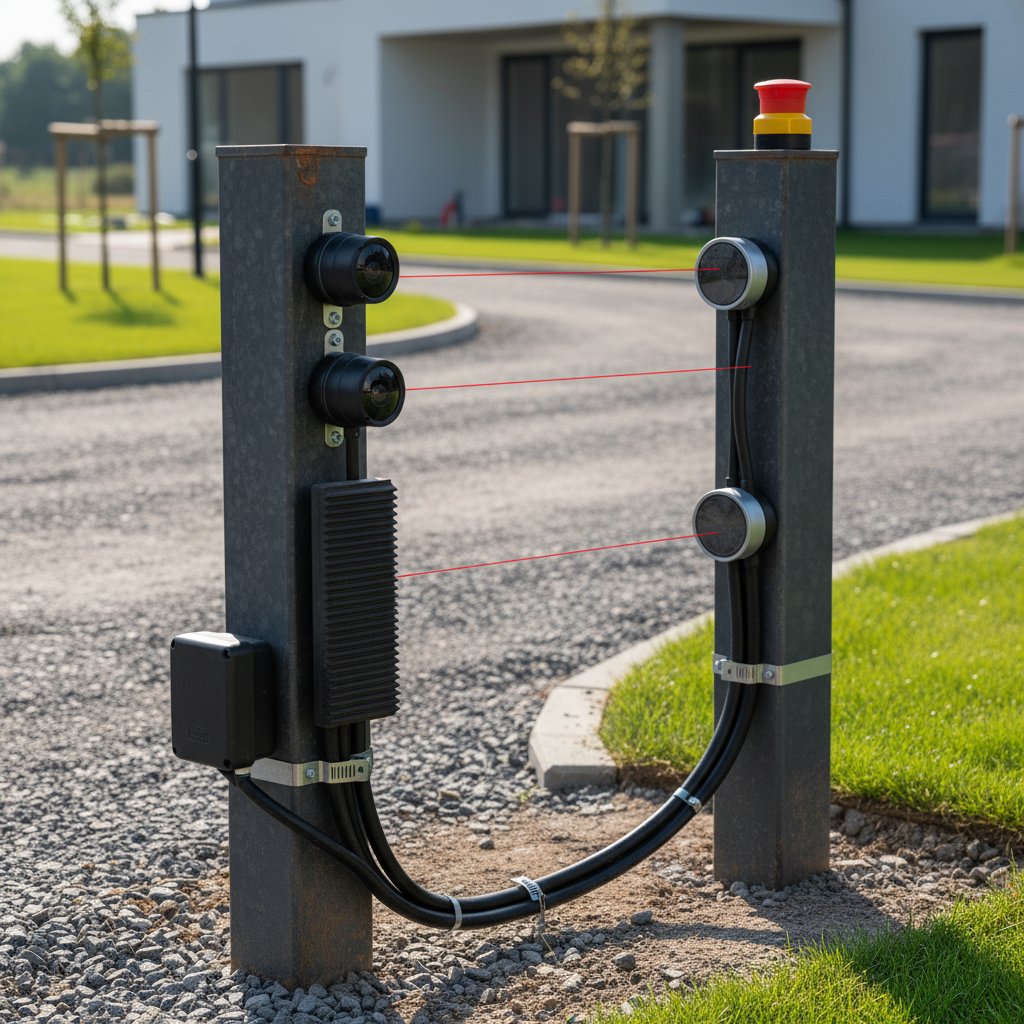
UL 325 standards require safety sensors on automatic gates. Reputable installers include these, but budget operators might quote without them. Photocell sensors ($120-$300), edge sensors ($200-$450), and warning lights ($80-$200) are non-negotiable for insurance and liability reasons.
Driveway Work
Your gate needs level, stable ground to operate properly. Cracked asphalt or settled concrete near the gate location? Repair costs run $800-$3,500 depending on the area. Some installations require widening the driveway approach—figure $15-$30 per square foot.
The Ongoing Tab
Annual maintenance contracts cost $200-$500 but prevent expensive emergency repairs. Gate operators need lubrication, adjustment, and inspection every 6-12 months. Skip it, and you're looking at $400-$1,200 service calls when something breaks.
Electricity costs are minor—about $3-$8 monthly—but replacement parts aren't. Circuit boards ($250-$600), motors ($400-$1,200), and chain/belt drives ($150-$400) all wear out eventually.
Key Takeaways
- Budget 40-60% above the initial quote for realistic total costs
- Electrical work and ground preparation are the biggest hidden expenses
- Factor in $300-$600 annually for maintenance and electricity
- Get itemized quotes from three contractors—vague estimates hide problems
- Ask specifically about permits, electrical runs, post foundations, and safety equipment
- Plan for $2,000-$4,000 in "surprise" costs on average installations
Steve doesn't regret his gate. He loves it. But he wishes someone had shot straight with him about the real numbers. His advice? "Take whatever quote you get, add $2,500, and that's probably closer to reality."
The peace of mind and convenience of an automated gate system is worth it for many homeowners. Just go in with eyes wide open and wallet prepared. Your future self—the one not scrambling to cover unexpected invoices—will thank you.